
Nanotechnology in Chemical Engineering: Recent Advances in Catalysis, Separation, Energy Systems, and Smart Process Integration
-
Fabinu Azeez Akinwumi
Department of Chemical Engineering, Awolowo University Obafemi, Ile ife, Osun State, Nigeria
Brighotaye Cheery VaekosenDepartment of Chemical Engineering, Faculty of Engineering, Federal University of Technology Minna, Minna, Niger State, Nigeria
Ohanele Emmanuela ChidimmaDepartment of Chemical Engineering, School of Engineering Technology, Federal Polytechnic Nekede, Owerri, Owerri, Imo State, Nigeria
Moses Abah Adondua

ResearchHub Nexus Institute, Nigeria
Micheal Oladosu AbimbolaResearchHub Nexus Institute, Nigeria
| Received 30 Jun, 2026 |
Accepted 01 Sep, 2026 |
Published 20 Sep, 2026 |
Nanotechnology has emerged as a transformative force in chemical engineering, enabling the precise manipulation of materials at the nanoscale to unlock unique physicochemical properties. Advances in nanomaterial synthesis, characterization, and functionalization have paved the way for breakthroughs in catalysis, separation, energy conversion, and smart process systems. As global industries seek sustainable and efficient solutions, the integration of nanotechnology offers new pathways for process intensification and resource optimization. However, translating laboratory-scale nanoinnovations into industrial practice remains challenging due to issues of scalability, lifecycle sustainability, and regulatory uncertainty. Addressing these complexities requires a comprehensive evaluation of current progress, limitations, and future directions. This review employs a structured analysis of peer-reviewed literature from the past two decades, focusing on four core domains: Nano-engineered catalysis, membrane and adsorptive separation, energy conversion and storage, and smart, integrated nano-systems. By synthesizing data from over 35 recent studies, the review highlights major advancements, such as enhanced catalytic selectivity, improved membrane permeability, increased energy density, and the rise of AI-driven nanomaterial discovery. Key research gaps identified include the need for scalable manufacturing techniques, thorough lifecycle and economic assessments, and the development of robust regulatory frameworks for safe industrial adoption. The novelty of this review lies in its cross-disciplinary perspective, which connects foundational advances in nanotechnology to emerging trends in digital integration and Industry 4.0. Ultimately, this review provides actionable insights for researchers and practitioners aiming to bridge the gap between nanoscale innovation and industrial-scale chemical engineering solutions.
| Copyright © 2026 Akinwumi et al. This is an open-access article distributed under the Creative Commons Attribution License, which permits unrestricted use, distribution, and reproduction in any medium, provided the original work is properly cited. |
INTRODUCTION
Nanotechnology represents one of the most profound technological revolutions of the 21st century, offering the capability to engineer materials and systems at the atomic and molecular levels1. With applications spanning medicine, energy, electronics, and environmental science, nanotechnology has fundamentally altered how society addresses challenges in health, sustainability, information processing, and resource utilization. The significance of nanotechnology lies in its ability to create materials with unique properties such as quantum effects, enhanced reactivity, and tailored electronic structures that are unattainable in their bulk forms2. These nanoscale phenomena have enabled new solutions in drug delivery, renewable energy, environmental remediation, and advanced manufacturing, shaping the innovation landscape across multiple industries.
Within this broader context, nanotechnology has become a transformative pillar of modern chemical engineering, enabling the rational design and manipulation of materials at dimensions where surface phenomena, quantum effects, and interfacial interactions dominate material behavior3. At the nanoscale, materials exhibit enhanced surface-to-volume ratios, tunable electronic structures, and modified transport characteristics that directly influence catalytic activity, separation selectivity, and energy conversion efficiency4. The integration of nanoscale science with chemical engineering principles has consequently redefined conventional process design strategies, shifting focus toward high-performance, material-driven process intensification. Contemporary analyses emphasize that nanotechnology now functions as a strategic enabler of sustainable and resource-efficient chemical processes rather than merely a materials science subfield5,6.
The advancement of nanotechnology within chemical engineering has been propelled by significant progress in nanomaterial synthesis, structural engineering, and functional optimization7. Precisely controlled nanostructures with tailored morphology and composition have demonstrated superior physicochemical properties compared to bulk materials, thereby enabling improved reactivity, stability, and system integration8. Increasingly, research efforts align nanomaterial innovation with sustainability objectives, emphasizing energy-efficient catalytic systems, environmentally benign processing routes, and circular material utilization9. This transition reflects the evolution from exploratory nanoscale discovery toward application-oriented nano-engineering that directly addresses industrial performance, environmental protection, and process intensification challenges10.
Catalysis represents one of the most influential domains in which nanotechnology has reshaped chemical engineering practice. Nanostructured catalysts provide enhanced active site exposure, optimized electronic environments, and improved mass transport characteristics, leading to superior reaction kinetics and selectivity11. In hydrogen production systems, advanced nanoscale catalysts have demonstrated improved mechanistic efficiency and reduced energy barriers, reinforcing their importance in clean energy technologies12. Porous nanomaterials further extend catalytic functionality by integrating tunable pore architectures and surface chemistry for multifunctional applications, including catalytic transformations and biosensing platforms13. These developments underscore the role of nanoscale engineering in driving sustainable synthesis, energy conversion, and performance optimization across reaction systems.
Nanotechnology has likewise transformed separation and environmental processes through the development of nano-enhanced membranes and nanoparticle-based remediation technologies. Composite membranes incorporating nanomaterials exhibit improved permeability, fouling resistance, and contaminant rejection in water and wastewater treatment systems14. In parallel, nanoparticle-based remediation strategies have emerged as effective clean technologies for pollutant removal, utilizing adsorption, photocatalytic degradation, and redox pathways to address complex environmental contaminants15. Beyond environmental applications, nanostructured materials have also enhanced electrochemical energy storage and conversion systems. Mesoporous nanomaterials and nanohybrids significantly improve supercapacitor performance by facilitating ion transport and increasing accessible surface area16. Similarly, nanocarbon-based electrocatalytic materials have strengthened the efficiency and durability of proton exchange membrane fuel cells, supporting the advancement of low-carbon energy technologies17. Despite these achievements, challenges related to scalable manufacturing, economic feasibility, and lifecycle performance continue to influence industrial deployment18.
However, a critical review gap remains in the current literature. Most existing reviews tend to focus narrowly on specific nanomaterial classes or single application domains such as catalysis, membranes, or energy storage without providing a holistic, cross-domain synthesis of nanotechnology’s impact across the full spectrum of chemical engineering. Additionally, previous articles often underemphasize the integration of smart, AI-assisted systems and the challenges of scaling laboratory advances to industrial manufacturing, sustainability assessment, and regulatory compliance19,20. As a result, there is a lack of comprehensive analyses that connect recent breakthroughs in nanomaterial science to emerging trends in digital process integration, lifecycle sustainability, and Industry 4.0 adoption. The novelty and significance of this review lie in its comprehensive and integrative perspective, which bridges advances in nanomaterial development with the demands of scalable, sustainable chemical engineering processes. Unlike previous articles, this review critically analyzes not only material innovations and their technical applications but also addresses cross-cutting themes such as digital integration, AI-assisted optimization, lifecycle sustainability, and regulatory challenges. By providing these multidimensional insights, this work equips researchers with a broader understanding of emerging opportunities, provides engineers with practical considerations for process integration and scale-up, and offers industry stakeholders a roadmap for responsible adoption of nanotechnology in next-generation chemical plants.
This review aims to fill these critical gaps by offering an up-to-date, multidisciplinary synthesis that not only highlights recent advances in nanotechnology for catalysis, separation, and energy systems but also critically examines ongoing obstacles and the essential requirements for industrial scalability and sustainable implementation. By doing so, this work provides actionable insights for researchers and practitioners, and establishes a comprehensive foundation for future innovation and responsible commercialization in chemical engineering.
EARLY FOUNDATIONS AND ENABLING TECHNOLOGIES (1959-2000)
The conceptual roots of nanotechnology in chemical engineering originate from early visions of manipulating matter at atomic and molecular scales, emphasizing that material properties are fundamentally dependent on structure at the nanoscale4. These foundational ideas laid the intellectual framework for the development of nanoscience and eventually for engineered nanomaterials with tailored functionality, enabling a paradigm shift from bulk to nanoscale material design2. The significance of this period lies in establishing that precise control over nanoscale features can profoundly influence chemical reactivity, mass transport, and interfacial phenomena, forming the basis of modern chemical engineering applications. A critical technological advancement during this period was the development of nanoscale characterization tools, which allowed scientists to directly observe and manipulate structures at atomic resolution1. The scanning tunneling microscope (STM) and the atomic force microscope (AFM) provided unprecedented access to surface topology, defects, and nanoscale morphology, enabling a direct correlation between structure and function1,4. These instruments established the foundation for rational design of nanostructured materials, allowing researchers to move beyond empirical synthesis toward controlled, reproducible engineering of nanoscale systems5.
In parallel, synthetic strategies for nanomaterials matured substantially. Methods such as colloidal synthesis, chemical vapor deposition, sol-gel techniques, and template-assisted growth enabled precise control of particle size, shape, and surface chemistry2,5. These controlled bottom-up approaches allowed the creation of nanoparticles, nanowires, and nanostructured films with narrowly defined characteristics, facilitating systematic studies of structure-property relationships21. The establishment of these synthesis protocols marked a critical transition from exploratory nanoscience to application-oriented nano-engineering, providing materials suitable for catalysis, separation, and energy systems. The discovery of novel carbon-based nanostructures in the late 20th century, including fullerenes and carbon nanotubes, exemplified the transformative potential of nanoscale morphology1,4. These carbon nanomaterials exhibited exceptional mechanical, electrical, and thermal properties, illustrating that nanoscale geometry could dramatically alter material performance. Such discoveries motivated extensive research into carbon and non-carbon nanomaterials, including mesoporous structures and hybrid composites, which later became integral to catalytic systems, membranes, and energy devices in chemical engineering5,21.
|
By the turn of the millennium, the synergy of advanced characterization techniques, controlled synthesis methods, and discovery of novel nanomaterials had established a robust foundation for nanotechnology in chemical engineering. This period transitioned nanoscience from theoretical exploration into practical, experimentally accessible science, enabling engineers to exploit nanoscale properties in catalysis, separation, and energy systems. These enabling technologies provided the critical platform for the rapid expansion of nanotechnology applications in the 21st century13,22.
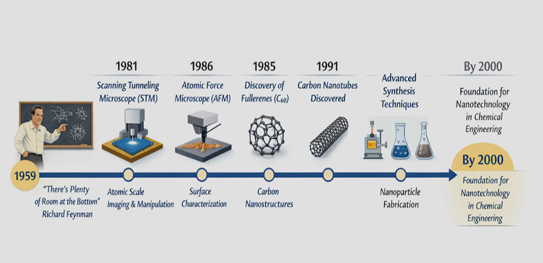
Figure 1 highlights key milestones including Richard Feynman’s conceptual vision (1959), the invention of the Scanning Tunneling Microscope (1981) and Atomic Force Microscope (1986), the discovery of fullerenes (1985) and carbon nanotubes (1991), and the development of advanced nanomaterial synthesis techniques, culminating in the establishment of nanotechnology as a foundational field for chemical engineering by 2000.
NANO ENGINEERED CATALYSIS AND REACTION SYSTEMS (2000-2012)
The application of nanotechnology in catalysis has profoundly transformed chemical engineering by enabling the precise control of catalyst properties at the nanoscale. Nanocatalysts, typically defined as materials with at least one dimension below 100 nm, exhibit exceptionally high surface areas and unique electronic characteristics that enhance reaction kinetics, selectivity, and stability compared with bulk catalysts1,2. These features provide chemical engineers with tools to optimize catalytic performance in industrially relevant reactions, including hydrogenation, oxidation, and carbon-carbon bond formation. A major focus during this period was the rational design of nanocatalysts to tune active site exposure, electronic properties, and particle-support interactions. Techniques such as controlled synthesis of metal and metal oxide nanoparticles, alloyed and core-shell structures, and hierarchical porous supports were developed to maximize surface activity and prevent deactivation6,23. Such strategies allowed for the creation of catalysts with enhanced selectivity and efficiency, highlighting the importance of nanoscale structural control in improving reaction outcomes and reducing energy consumption.
| Table 1: | Key nano-engineered catalysts and their applications (2000-2012) | |||
| Nanocatalyst type | Design/structure | Applications | Performance highlights | References |
| Metal nanoparticles (Pt, Pd, Au) |
Controlled size, shape, and facet exposure |
Hydrogenation, oxidation |
Enhanced activity and selectivity; improved turnover frequency (TOF) |
Cid and Rivera6 |
| Metal oxide nanoparticles (TiO2, CeO2) |
High surface area, defect engineering |
Oxidation reactions, CO oxidation |
Increased active site density; improved catalytic stability |
Pour et al.25 |
| Core-shell nanoparticles |
Metal core with protective shell (e.g., Pt@SiO2) |
Selective oxidation, hydrogenation |
Reduced metal leaching; enhanced durability and selectivity |
Qin26 |
| Alloyed nanoparticles |
Bimetallic/alloy design (e.g., Pd-Cu, Pt-Ni) |
CO2 reduction, C-C coupling |
Tunable electronic properties; improved activity and product distribution |
Ganesan et al.10 |
| Supported nanocatalysts |
Nanoparticles on porous supports (mesoporous silica, carbon) |
Industrial catalytic processes |
Improved dispersion; reduced sintering; higher surface area utilization |
Ahire et al.1 |
| Nanocatalysts in continuous-flow microreactors |
Embedded in microreactor channels |
Fine chemical synthesis, specialty catalysis |
Superior mass transfer; precise reaction control; enhanced selectivity |
Feng et al.9 |
The integration of nanocatalysts into reactor systems emerged as another critical development. Continuous-flow microreactors incorporating nanostructured catalysts demonstrated superior mass transfer and heat management, resulting in improved conversion and selectivity compared with conventional reactors9. These systems underscored the synergistic potential of combining nanostructured catalysts with process engineering to achieve optimized reaction conditions and scalable production, particularly in fine chemical synthesis and specialty catalysis. In parallel, advances in mechanistic understanding were achieved by studying how nanoscale morphology influences catalytic pathways. Investigations revealed that particle size, shape, defect sites, and metal-support interactions play pivotal roles in determining activity and stability, providing insights into the rational design of more durable and selective catalysts10,24. This knowledge enabled engineers to bridge the gap between laboratory-scale nanocatalyst performance and practical industrial applications.
In summary, the 2000-2012 period established nanocatalysis as a cornerstone of modern chemical engineering. By integrating controlled nanostructure synthesis, reactor design, and mechanistic insights, researchers developed catalytic systems with enhanced activity, selectivity, and stability. These developments laid the foundation for subsequent innovations in energy conversion, environmental catalysis, and sustainable chemical processes, demonstrating the strategic importance of nanotechnology in process intensification and industrial transformation (Table 1).
NANOTECHNOLOGY IN SEPARATION AND ENVIRONMENTAL PROCESSES (2005-2015)
The period between 2005 and 2015 marked a transformative phase in the integration of nanotechnology into separation science and environmental engineering. During this decade, advances in nanostructured membranes, adsorptive nanomaterials, and nano-enhanced process intensification significantly improved water purification, carbon capture, and pollutant removal technologies. These developments laid the groundwork for today's high-performance environmental systems.
Nanoporous and thin-film nanocomposite membranes: Nanoporous and thin-film nanocomposite (TFN) membranes emerged as one of the most impactful nanotechnological innovations in separation processes. The incorporation of nanoparticles such as metal oxides, carbon nanomaterials, and functionalized nanofillers into polymer matrices enhanced membrane permeability, selectivity, fouling resistance, and mechanical stability. Recent reviews demonstrate that nano-enhanced composite membranes exhibit improved hydrophilicity, controlled pore architecture, and enhanced contaminant rejection efficiency compared to conventional membranes27. Similarly, advanced polymeric nanocomposite membranes have shown superior performance in desalination, ultrafiltration, and wastewater remediation applications due to improved flux and anti-fouling characteristics28. Beyond water purification, nanoengineered membrane surfaces have introduced a new paradigm in gas separation technologies. Surface functionalization and nanopatterning strategies enable improved CO2 selectivity and permeability, advancing membrane-based carbon capture systems29. These innovations collectively demonstrate how nanoscale engineering significantly enhances membrane-based separation efficiency.
|
Adsorptive nanomaterials for CO2 capture and wastewater treatment: Adsorptive nanomaterials gained prominence during this era due to their high surface area-to-volume ratio, tunable surface chemistry, and enhanced sorption capacity. Carbon-based nanomaterials (e.g., graphene derivatives, carbon nanotubes) and metal-oxide nanoparticles have shown exceptional effectiveness in removing heavy metals, dyes, pharmaceuticals, and organic pollutants from wastewater. Rezania et al.28 reported that carbon-based and metal-oxide nanoadsorbents demonstrate high adsorption capacities, rapid kinetics, and reusability, making them promising candidates for scalable wastewater treatment technologies. Their surface functional groups allow selective binding of contaminants through electrostatic interactions, complexation, and hydrogen bonding mechanisms. In parallel, advances in nanostructured catalytic materials for hydrogen production have indirectly contributed to environmental sustainability by supporting cleaner energy pathways and reducing reliance on fossil fuels17. Although primarily energy-focused, these nanocatalyst developments intersect with environmental engineering through emission reduction and carbon management strategies.
Nano-enhanced mass transfer and process intensification: Nanotechnology has also played a critical role in enhancing mass transfer and enabling process intensification. Nanostructured materials increase interfacial area, improve diffusion pathways, and promote faster reaction and separation kinetics. In membrane systems, nanoparticle incorporation reduces internal concentration polarization and enhances permeability without sacrificing selectivity30. Surface nanoengineering strategies further improve gas-liquid interactions, particularly in CO2 capture systems, by modifying wettability and increasing active adsorption sites14. These nano-enabled enhancements support the development of compact, energy-efficient separation units aligned with modern sustainability objectives. The integration of nanomaterials into catalytic systems for hydrogen generation also demonstrates how nanoscale design optimizes reaction mechanisms and improves energy conversion efficiency17, reinforcing the broader theme of process intensification through nanotechnology.
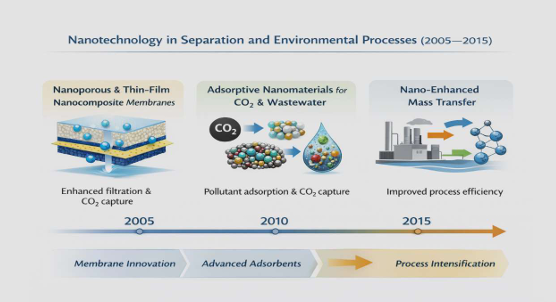
Figure 2 summarizes key nanotechnology advancements in separation processes, including thin-film nanocomposite membranes, adsorptive nanomaterials for wastewater and CO2 capture, and nano-enhanced mass transfer. These innovations improved permeability, selectivity, and contaminant removal efficiency.
ENERGY CONVERSION, STORAGE, AND THERMAL SYSTEMS (2010-2020)
Between 2010 and 2020, nanotechnology significantly advanced energy conversion, electrochemical storage, and thermal management systems. Nanoscale material design improved electrode kinetics, catalytic efficiency, and heat transfer performance, enabling higher energy density, enhanced reaction rates, and more sustainable process engineering solutions. These developments strengthened the integration of renewable energy technologies and low-carbon process systems.
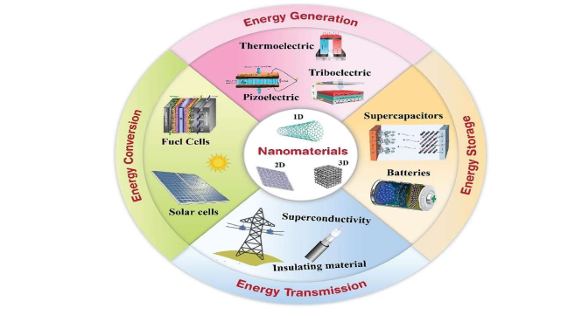
Figure 3 illustrates the applications of nanomaterials in various energy technologies, including energy storage, generation, transmission, and conversion, highlighting their role in enhancing efficiency and performance.
Nanostructured electrodes in batteries and supercapacitors: Nanostructured electrodes have become fundamental to improving electrochemical energy storage performance. Engineering electrode materials at the nanoscale increases active surface area, shortens ion diffusion pathways, and enhances electron transport, thereby improving specific capacity and rate capability in batteries and supercapacitors33. Carbon-based nanomaterials such as carbon nanotubes (CNTs), graphene, and hybrid nanocomposites provide high conductivity, structural stability, and enhanced electrochemical activity in supercapacitor electrodes25. These nanocomposite architectures improve energy-power density balance and long-term cycling stability by optimizing electrode-electrolyte interfaces25. In fuel cell systems, nanocarbon-based electrocatalytic materials have also enhanced electrode durability and proton exchange membrane fuel cell (PEMFC) performance through improved catalyst dispersion and corrosion resistance34. Collectively, nanoscale electrode engineering during this period contributed to higher efficiency, stability, and scalability in advanced energy storage technologies.
Photocatalysis and electrocatalysis for hydrogen and CO2 conversion: Nanostructured catalysts have played a central role in advancing hydrogen production and carbon conversion technologies. The development of nanoscale electrocatalysts has improved hydrogen evolution reaction (HER) kinetics by increasing active site density and modifying electronic structure, thereby reducing overpotential and enhancing catalytic efficiency17. Similarly, photocatalytic materials engineered at the nanoscale exhibit enhanced light absorption, improved charge separation, and optimized surface reaction pathways, which collectively increase solar-driven hydrogen production efficiency12. Advances in reactor design and nanostructured photocatalysts have further improved hydrogen yield and system stability under visible light conditions12. In fuel cell and electrochemical conversion systems, nanocarbon-based electrocatalysts contribute to improved oxygen reduction and overall catalytic durability, supporting efficient energy conversion in low-carbon applications35. These catalytic innovations between 2010 and 2020 strengthened the technological foundation for renewable hydrogen and carbon-neutral energy systems.
|
Nanofluids for enhanced heat and mass transfer: Nanofluids, consisting of nanoparticles dispersed in base fluids, have demonstrated significantly improved thermophysical properties compared to conventional heat transfer media. The incorporation of metallic, metal-oxide, or carbon-based nanoparticles enhances thermal conductivity, convective heat transfer coefficients, and overall heat exchanger performance16. Hybrid nanofluids, which combine multiple nanoparticle types, further improve thermal transport characteristics through synergistic interactions and improved dispersion stability16. These nanoscale enhancements reduce thermal resistance, increase heat transfer rates, and support process intensification in solar thermal systems, cooling technologies, and industrial energy recovery systems16. The improved mass and heat transfer performance enabled by nanofluids has contributed to more energy-efficient thermal systems across a range of engineering applications.
Contributions to low-carbon and sustainable process engineering: Nanotechnology-driven advances in electrodes, catalysts, and thermal fluids have collectively contributed to low-carbon and sustainable process engineering. Enhanced electrochemical storage systems reduce energy losses and extend device lifetimes, thereby improving lifecycle sustainability of batteries and supercapacitors25,36. Nanostructured electrocatalysts and photocatalysts facilitate efficient hydrogen production and fuel cell operation, supporting the transition toward clean energy systems with reduced greenhouse gas emissions12,17. Additionally, improved fuel cell electrode materials increase durability and operational efficiency, further lowering carbon intensity in energy conversion processes37. Nano-enhanced thermal systems using advanced nanofluids reduce energy consumption in heat transfer operations, contributing to process intensification and improved overall energy efficiency16. Together, these nanoscale innovations between 2010 and 2020 have played a critical role in advancing sustainable, high-efficiency, and low-carbon energy systems (Table 2).
SMART AND INTEGRATED NANO-SYSTEMS IN MODERN CHEMICAL ENGINEERING (2015-PRESENT)
Since 2015, nanotechnology has transitioned from isolated material innovation toward integrated, intelligent systems that combine responsiveness, sensing, digital control, and advanced manufacturing. Modern chemical engineering increasingly relies on smart nano-systems capable of adaptive behavior, real-time monitoring, data-driven optimization, and seamless integration within digitally connected production environments. The convergence of stimuli-responsive materials, nano-enabled sensing platforms, artificial intelligence (AI), and nanomanufacturing technologies reflects a paradigm shift toward autonomous, efficient, and sustainable process systems21,39. These advancements position nanotechnology as a central component of Industry 4.0-driven chemical engineering.
| Table 2: | Structure-function relationships and engineering implications of nanomaterials in energy systems (2010-2020) | |||
| Application area | Nanoscale design strategy |
Mechanistic advantage | Process-level engineering implication |
References |
| Electrochemical energy storage |
Hierarchical porosity and reduced particle size in carbon-based electrodes |
Shortened ion diffusion length and enhanced charge transfer kinetics |
Enables high-rate performance and improved energy-power density optimization in batteries and supercapacitors |
|
| Fuel cell electrode engineering |
Nanocarbon-supported catalyst dispersion |
Increased electrochemically active surface area and reduced catalyst degradation |
Enhances PEM fuel cell durability and operational efficiency |
Chukwudi et al.38 |
| Hydrogen electrocatalysis (HER) |
Electronic structure tuning of nanocatalysts |
Lowered activation energy and optimized hydrogen adsorption/desorption balance |
Reduces overpotential and improves renewable hydrogen production efficiency |
Kumar et al.17 |
| Photocatalytic water splitting |
Band-gap engineering and surface heterojunction design |
Improved light harvesting and charge carrier separation |
Increases solar-to-hydrogen conversion efficiency and reactor productivity |
Han et al.12 |
| Thermal systems and heat transfer |
Hybrid nanoparticle dispersion in base fluids |
Enhanced thermal conductivity via Brownian motion and interfacial thermal transport |
Supports process intensification and energy-efficient heat exchanger design |
Kalsi et al.16 |
Stimuli-responsive and self-assembled nanomaterials: Stimuli-responsive nanomaterials are designed to alter their physicochemical properties in response to external triggers such as temperature, pH, light, or electric fields. Smart polymeric systems, in particular, exhibit reversible swelling, structural rearrangement, or permeability changes, enabling controlled release, adaptive separation, and tunable interfacial behavior3. Recent advances emphasize multi-responsive polymers and self-assembled nanostructures that enhance structural precision and functionality while maintaining stability under operational conditions3. Self-assembly strategies further allow nanoscale organization without complex fabrication processes, facilitating scalable integration into catalytic systems, membranes, and responsive coatings. In energy-related applications, nanoscale structural control improves electrochemical activity and interfacial interactions, contributing to enhanced performance in advanced energy storage systems19. These developments demonstrate how dynamic and self-organizing nanomaterials support adaptable and multifunctional process platforms.
Nano-sensors for real-time process monitoring and control: Nano-enabled sensors have become essential components of intelligent chemical engineering systems. Their high surface-to-volume ratio, tunable electronic structure, and enhanced sensitivity enable rapid detection of chemical species, temperature fluctuations, pressure variations, and environmental contaminants7. Recent advances in nanomaterials for sensing applications show significant improvements in selectivity, signal amplification, and response time, allowing precise monitoring within complex industrial environments20. These nanosensors facilitate real-time process optimization, predictive maintenance, and safety management by enabling continuous data acquisition and rapid feedback control. The integration of nano-sensors into energy systems further enhances device diagnostics and performance tracking, supporting stable and efficient energy storage and conversion technologies19. As digital monitoring becomes central to Industry 4.0 frameworks, nanosensors serve as the foundational interface between materials and data-driven control systems.
AI-ASSISTED NANOMATERIAL DISCOVERY AND OPTIMIZATION
Artificial intelligence and machine learning have revolutionized nanomaterial design by enabling accelerated discovery and predictive optimization. Generative AI models can explore vast compositional and structural spaces, identifying promising nanoporous materials and functional architectures with improved efficiency compared to conventional experimental screening34. AI-driven platforms integrate computational modeling, materials databases, and high-throughput simulations to predict material properties, stability, and performance metrics before synthesis, significantly reducing development time and cost40. Furthermore, the convergence of AI with nanomanufacturing enhances adaptive process control and intelligent fabrication strategies, allowing real-time optimization of synthesis parameters and quality assurance21. This integration bridges nanoscale material design with automated production systems, accelerating translation from laboratory innovation to industrial application.
|
INTEGRATION WITHIN ADVANCED MANUFACTURING AND INDUSTRY 4.0 FRAMEWORKS
The integration of nanotechnology within Industry 4.0 ecosystems represents a major advancement in modern chemical engineering. Nanomanufacturing platforms increasingly leverage automation, robotics, digital twins, and cyber-physical systems to achieve precision fabrication and scalable production21. Smart nano-systems, combined with embedded nanosensors and AI analytics, enable interconnected manufacturing processes characterized by real-time monitoring, decentralized decision-making, and enhanced quality control21. In energy and electronic device manufacturing, nanoscale materials contribute to higher efficiency, reduced material consumption, and improved system reliability19,20. The alignment of nanotechnology with digital manufacturing infrastructures supports sustainable production models, reduced waste generation, and improved lifecycle performance.
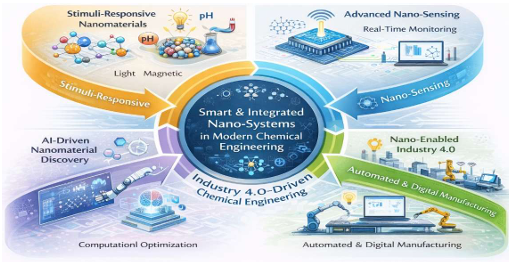
Figure 4 illustrates the convergence of stimuli-responsive nanomaterials, nano-enabled sensing, AI-assisted materials design, and digitally connected manufacturing within modern chemical engineering systems. These components interact to enable adaptive functionality, real-time monitoring, predictive optimization, and automated production workflows aligned with Industry 4.0 principles.
FUTURE PERSPECTIVES AND EMERGING DIRECTIONS
The field of nanotechnology in chemical engineering is rapidly advancing from isolated material innovations toward integrated, intelligent, and sustainable process systems. Future research will focus on aligning nanomanufacturing, smart nano-systems, and digital optimization to achieve scalable, adaptive, and environmentally responsible processes15,31. Achieving this requires interdisciplinary collaboration across materials science, process engineering, and data-driven technologies. One major trend is the development of multi-functional smart nanomaterials. Stimuli-responsive and self-assembled nanomaterials, when combined with embedded nanosensors, allow autonomous adaptation in separation, catalysis, and energy processes. These systems can monitor real-time conditions and adjust structural or functional properties, enhancing efficiency and robustness under variable industrial environments8,31.
AI-assisted nanomaterial design and optimization will play a central role in accelerating discovery and reducing development costs. Machine learning and generative design frameworks enable prediction of structure-property relationships, efficient optimization of process parameters, and automated synthesis planning21. Integration with digital twin technologies allows continuous feedback between experimental results and computational models, ensuring adaptive and precise process control. Scalable nanomanufacturing is also critical for translating laboratory innovations into industrial applications. Advanced techniques, such as additive manufacturing, modular fabrication, and roll-to-roll processes, facilitate high-throughput production of nanomaterials while maintaining structural precision and functionality15,27. These methods reduce material waste, energy consumption, and cost, making nanotechnology adoption more feasible for chemical engineering industries.
Finally, sustainability and process governance will increasingly guide future nanotechnology development. Life-cycle assessment, circular economy integration, and safe-by-design approaches must be incorporated from early design stages. Aligning smart nano-systems with sustainable process frameworks ensures that environmental performance complements enhanced functionality and digital integration8,31. In summary, the future of nanotechnology in chemical engineering depends on the integration of smart material systems, AI-driven optimization, scalable manufacturing, and sustainability principles. When combined, these strategies will enable adaptive, efficient, and environmentally responsible chemical processes that meet the demands of Industry 4.0.
CONCLUSION
Nanotechnology has profoundly transformed chemical engineering, enabling innovations in catalysis, energy conversion, separation, sensing, and process intensification. From the early development of nanomaterials to the integration of smart, stimuli-responsive systems and AI-assisted design, the field has progressed toward highly efficient, adaptive, and sustainable process solutions. Emerging trends, including multi-functional nanoplatforms, real-time monitoring, and scalable nanomanufacturing, highlight the convergence of material science, digital technology, and industrial practice.
The integration of these advancements promises to enhance process efficiency, reduce environmental impact, and support the transition toward Industry 4.0-enabled chemical plants. By bridging laboratory discoveries with industrial implementation, nanotechnology offers unprecedented opportunities to create intelligent, resilient, and sustainable chemical processes. The future lies in interdisciplinary collaboration, responsible innovation, and the continued development of scalable, smart, and environmentally conscious nanotechnologies that can meet the evolving demands of modern chemical engineering.
SIGNIFICANCE STATEMENT
This review highlights the transformative role of nanotechnology in advancing chemical engineering through improved catalysis, high-performance separation technologies, efficient energy conversion and storage, and smart process integration. By identifying recent innovations, existing challenges, and future research priorities, it provides valuable guidance for researchers, industry professionals, and policymakers. The review also emphasizes the importance of scalable manufacturing, lifecycle sustainability, regulatory compliance, and AI-enabled nanomaterial design to accelerate the safe and sustainable industrial adoption of nanotechnology.
ACKNOWLEDGMENT
We thank all the researchers who contributed to the success of this research work.
REFERENCES
- Ahire, S.A., A.A. Bachhav, T.B. Pawar, B.S. Jagdale, A.V. Patil and P.B. Koli, 2022. The Augmentation of nanotechnology era: A concise review on fundamental concepts of nanotechnology and applications in material science and technology. Results Chem., 4.
- Amen, R., A. Mukhtar, S. Saqib, Sami Ullah and A.G. Al-Sehemi et al., 2021. History and Development of Nanomaterials. In: Nanomaterials: Synthesis, Characterization, Hazards and Safety, Tahir, M.B., M. Sagir and A.M. Asiri (Eds.), Elsevier, Amsterdam, Netherlands, ISBN: 978-0-12-823823-3, pp: 1-14.
- Balcerak-Woźniak, A., M. Dzwonkowska-Zarzycka and J. Kabatc-Borcz, 2024. A comprehensive review of stimuli-responsive smart polymer materials-recent advances and future perspectives. Materials, 17.
- Bayda, S., M. Adeel, T. Tuccinardi, M. Cordani and F. Rizzolio, 2020. The history of nanoscience and nanotechnology: From chemical-physical applications to nanomedicine. Molecules, 25.
- Cao, M., 2024. Recent development of nanomaterials for chemical engineering. Nanomaterials, 14.
- Cid, F. and A. Rivera, 2025. Advances in nanomaterials for catalysis: Design strategies, Reaction mechanisms, and emerging industrial applications. Innovative Rev. Eng. Sci., 3: 81-90.
- Darwish, M.A., W. Abd-Elaziem, A. Elsheikh and A.A. Zayed, 2024. Advancements in nanomaterials for nanosensors: A comprehensive review. Nanoscale Adv., 6: 4015-4046.
- Díez-Pascual, A.M., 2023. Polymers and nanotechnology for industry 4.0. Polymers, 15.
- Feng, H., Y. Zhang, J. Liu and D. Liu, 2022. Towards heterogeneous catalysis: A review on recent advances of depositing nanocatalysts in continuous-flow microreactors. Molecules, 27.
- Ganesan, M., K.J. Hughes, R. Tenchov, K.A. Iyer and K. Ralhan et., 2025. Leveraging nanoscience for advancing heterogeneous catalysis: An analysis of the influence of nanocatalyst dimensions. ACS Appl. Energy Mater., 8: 8656-8679.
- Gohar, O., M.Z. Khan, I. Bibi, N. Bashir and U. Tariq et al., 2024. Nanomaterials for advanced energy applications: Recent advancements and future trends. Mater. Des., 241.
- Han, X., A. Qian, L. Ye, M. Fan and J. Yu et al., 2025. Photocatalytic materials and reactors for hydrogen production: A review. Mol. Chem. Eng., 1.
- Pingua, N., A. Chandra, A.K. Gautam, R.K. Arya and A. Kumar, 2025. Nanotechnology in Chemical Engineering. In: Chemical Engineering Essentials 2: Advanced Processes, Materials, and Sustainability, Arya, R.K., G.D. Verros and J.P. Davim (Eds.), Wiley, New Jersey, ISBN: 9781394372379, pp: 173-204.
- Hu, L., V.T. Bui, N. Esmaeili and H. Lin, 2024. Nanoengineering membrane surfaces: A new paradigm for efficient CO2 capture. Carbon Capture Sci. Technol., 10.
- Ikumapayi, O.M. and O.T. Laseinde, 2024. Nanomanufacturing in the 21st century: A review of advancements, applications and future prospects. J. Eur. Systèmes Automatisés, 57: 1235-1248.
- Kalsi, S., S. Kumar, A. Kumar, T. Alam, A. Sharma and A.S. Yadav, 2025. A review on hybrid nanofluids for heat transfer: Advancements, synthesis, challenges and applications. Discover Appl. Sci., 7.
- Kumar, N., R. Aepuru, S.Y. Lee and S.J. Park, 2025. Advances in catalysts for hydrogen production: A comprehensive review of materials and mechanisms. Nanomaterials, 15.
- Yadav, K.K., M.M.S. Cabral-Pinto, A. Gacem, A.M. Fallatah and B. Ravindran et al., 2024. Recent advances in the application of nanoparticle-based strategies for water remediation as a novel clean technology-a comprehensive review. Mater. Today Chem., 40.
- Mohammed, H., M.F. Mia, J. Wiggins and S. Desai, 2025. Nanomaterials for energy storage systems-a review. Molecules, 30.
- Nag, A. and D. Chaudhuri, 2026. Advances in nanomaterials for energy and sensing applications: From fundamentals to device. Discover Electron., 3.
- Yadavalli, V.K., 2025. The convergence of nanomanufacturing and artificial intelligence: Trends and future directions. Nanotechnology, 36.
- Nandipati, M., O. Fatoki and S. Desai, 2024. Bridging nanomanufacturing and artificial intelligence-a comprehensive review. Materials, 17.
- Pal, N., D. Chakraborty, E.B. Cho and J.G. Seo, 2023. Recent developments on the catalytic and biosensing applications of porous nanomaterials. Nanomaterials, 13.
- Pandey, M., K. Deshmukh, P. Kaur, A. Zidan and S. Aşır et al., 2025. Recent advances in mesoporous nanostructured materials and nanohybrids for supercapacitor applications: A review. Sustainable Energy Fuels, 9: 6380-6412.
- Pour, G.B., H. Ashourifar, L.F. Aval and S. Solaymani, 2023. CNTs-supercapacitors: A review of electrode nanocomposites based on CNTs, graphene, metals, and polymers. Symmetry, 15.
- Qin, Z., 2023. Nanostructure design of catalysts: Latest advances and prospects. Nanomaterials, 13.
- Mustafijur Rahman, K. Sirajul Islam, T.M. Dip, M.F.M. Chowdhury and S.R. Debnath et al., 2024. A review on nanomaterial-based additive manufacturing: Dynamics in properties, prospects, and challenges. Prog. Addit. Manuf., 9: 1197-1224.
- Rezania, S., N. Darajeh, P.F. Rupani, A. Mojiri, H. Kamyab and M. Taghavijeloudar, 2024. Recent advances in the adsorption of different pollutants from wastewater using carbon-based and metal-oxide nanoparticles. Appl. Sci., 14.
- Sabater, M.J., 2024. Nanotechnology in catalysis, 2nd edition. Catalysts, 14.
- Sahu, A., R. Dosi, C. Kwiatkowski, S. Schmal and J.C. Poler, 2023. Advanced polymeric nanocomposite membranes for water and wastewater treatment: A comprehensive review. Polymers, 15.
- Sipho, T., N. Lindiwe and T. Ngidi, 2026. Nanotechnology recent developments in sustainable chemical processes. Innovative Rev. Eng. Sci., 3: 35-43.
- Vo, T.S., K.M. Lwin and K. Kim, 2024. Recent developments of nano-enhanced composite membranes designed for water/wastewater purification-a review. Adv. Compos. Hybrid Mater., 7.
- Wu, X., 2023. Nanostructured electrodes for high-performance supercapacitors and batteries. Nanomaterials, 13.
- Xie, E., X. Wang, J.I. Siepmann, H. Chen and R.Q. Snurr, 2025. Generative AI for design of nanoporous materials: Review and future prospects. Digital Discovery, 4: 2336-2363.
- Zasypkina, A.A., N.A. Ivanova, D.D. Spasov, R.M. Mensharapov, M.V. Sinyakov and S.A. Grigoriev, 2024. Recent advances in the development of nanocarbon-based electrocatalytic/electrode materials for proton exchange membrane fuel cells: A review. Catalysts, 14.
- Paul-Okore, R.O., C.J. Attah, A.N. Godwin, Y.A. Showemimo, M.A. Abah and M.A. Oladosu, 2026. Sustainable bioenergy: A review of biomass conversion technologies and their environmental impacts. Int. J. Res. Manage. Sci. Eng., 3: 32-43.
- Nikitina, A.A., F.V. Lavrentev, V.Y. Yurova, D.Y. Piarnits, O.O. Volkova, E.V. Skorb and D.G. Shchukin, 2024. Layered nanomaterials for renewable energy generation and storage. Mater. Adv., 5: 394-408.
- Chukwudi, O.Z., I.A. Mahmud, A.O. Idris, M.A. Abah, M.O. Abimbola and O.D. Agida, 2026. Advances in hydrogen, bioelectrochemical systems, and advanced biofuels for a low-carbon future. Chem. Environ. Sci. Arch., 6: 27-36.
- Abah, M.A., R.O. Alabi, M.A. Oladosu, O.D. Agida and N.J. Nnaemek, 2025. Sustainable energy production from mine waste: A review of opportunities and challenges. Environ. Rep., 7: 240-245.
- Abah, M.A., S.V. Tatah, S.C. Elikplim, A.J. Ocheinehi and N.J. Nnaemeka et al., 2026. Application of nanotechnology in water treatment and reuse: A review of recent advances and future opportunities. Int. J. Water Res., 8.
How to Cite this paper?
APA-7 Style
Akinwumi,
F.A., Vaekosen,
B.C., Chidimma,
O.E., ,
M., Abimbola,
M.O. (2026). Nanotechnology in Chemical Engineering: Recent Advances in Catalysis, Separation, Energy Systems, and Smart Process Integration. Singapore Journal of Scientific Research, 16(1), 30-43. https://doi.org/10.3923/sjsr.2026.30.43
ACS Style
Akinwumi,
F.A.; Vaekosen,
B.C.; Chidimma,
O.E.; ,
M.; Abimbola,
M.O. Nanotechnology in Chemical Engineering: Recent Advances in Catalysis, Separation, Energy Systems, and Smart Process Integration. Singapore J. Sci. Res 2026, 16, 30-43. https://doi.org/10.3923/sjsr.2026.30.43
AMA Style
Akinwumi
FA, Vaekosen
BC, Chidimma
OE,
M, Abimbola
MO. Nanotechnology in Chemical Engineering: Recent Advances in Catalysis, Separation, Energy Systems, and Smart Process Integration. Singapore Journal of Scientific Research. 2026; 16(1): 30-43. https://doi.org/10.3923/sjsr.2026.30.43
Chicago/Turabian Style
Akinwumi, Fabinu, Azeez, Brighotaye Cheery Vaekosen, Ohanele Emmanuela Chidimma, Moses Abah Adondua , and Micheal Oladosu Abimbola.
2026. "Nanotechnology in Chemical Engineering: Recent Advances in Catalysis, Separation, Energy Systems, and Smart Process Integration" Singapore Journal of Scientific Research 16, no. 1: 30-43. https://doi.org/10.3923/sjsr.2026.30.43

This work is licensed under a Creative Commons Attribution 4.0 International License.
